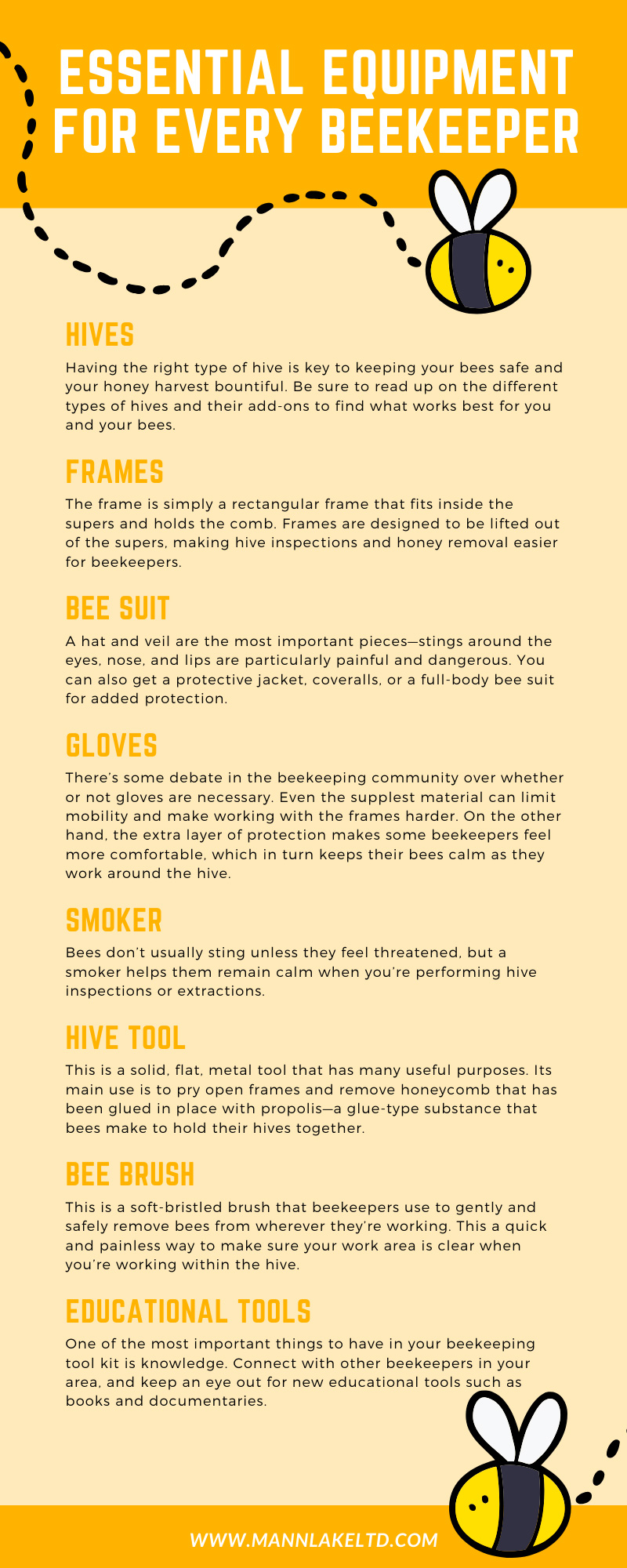

Essential Beekeeping Equipment: Beginner’s Gear
Essential Beekeeping Equipment: Beginner’s Gear
TL;DR: Beekeeping is a rewarding and environmentally beneficial hobby, but it requires the right setup to ensure success. This chapter breaks down every essential item a new beekeeper needs to start safely, efficiently, and confidently.
- Hives & Frames: The foundation of every colony, where bees build comb, raise brood, and store honey.
- Protective Gear: Bee suits, gloves, and veils form key beekeeping safety equipment for avoiding stings.
- Tools & Accessories: Smokers, hive tools, and bee brushes help manage hives calmly and efficiently.
- Feeders & Fuel: Supplement bees during nectar shortages and keep smokers ready with natural fuel.
- Learning & Upgrades: Educational resources, queen catchers, and optional tools refine your skills as your apiary grows.
As a hobby, beekeeping offers many benefits, rewards, and challenges. From a financial standpoint, beekeepers can make extra income by selling honey and other products made from beeswax and propolis. Your garden and local environment flourish due to the hard work of pollinating bees.
Beekeeping also connects you to a long tradition of sustainability and craftsmanship. With the right setup, anyone can learn the beekeeping basics needed to succeed.
To get started, you’ll need a few essential pieces of beekeeping equipment designed to keep both you and your bees safe. That’s exactly what we’ll explore in this chapter.
No matter your motivation, having the right beekeeping supplies for beginners makes the journey smoother and more rewarding. Here is the essential beekeeping equipment list for beginners.
Beginner Beekeeping Equipment Checklist
Before you dive into hive types and tools, here’s a quick overview of the basic beekeeping equipment every beginner should have:
Essential Beekeeping Supplies for Beginners
- Hive and Frames: The bees’ home and workspace for building comb and storing honey.
- Feeder: Provides sugar syrup or supplements when natural food sources are scarce.
- Bee Suit and Gloves: Core beekeeping safety equipment to prevent stings.
- Smoker and Hive Tool: Used during inspections to calm bees and safely open hives.
- Bee Brush and Queen Catcher: Helps move bees gently and handle the queen with care.
- Educational Tools: Books, online courses, or community resources for learning beekeeping basics.
Below, we’ll break each of these categories down, so you understand what you really need to get started.
Hives
Having the right type of hive and hive accessories is key to keeping your bees safe and your honey harvest bountiful. When creating your first apiary, your hive will be the most important item on your basic beekeeping equipment list. The type of hive you’ll need depends on where you’ll place it in your yard and how you want to raise your bees.
For example, if you plan to harvest comb as well as plain honey, you might want a queen excluder in your hive to keep the brood out of the honey supers. If you live somewhere that gets a lot of rain, you’ll want a hive stand to keep the hive off the wet ground. Hive stands provide stability in any environment, and most beekeepers use them no matter where they live.
Be sure to explore the different hive types and their add-ons to find what works best for you and your bees.
Frames
These are among the most important components of the hive. The frame is simply a rectangular frame that fits inside the supers and holds the comb. This is where the queen lays her brood and where the rest of the colony stores its honey.
Frames are designed to be lifted from the hive boxes, making hive inspections and honey removal easier for beekeepers. The foundation in the middle of the frame helps support the weight of the comb and gives your bees an even model to follow when they’re building their combs out of wax.
As with hives, there are many different types of hive frames that you can buy. You can choose frames made from wood or plastic and ones that come with or without a foundation. Many beekeepers also get hive kits instead of assembled frames and build them on their own so that they perfectly fit the beehive.
When creating your beekeeping equipment list, remember that frames are the heart of your hive’s structure. Ultimately, they determine how efficiently your colony builds, stores, and grows.
How Many Frames Should I Use?
Most beekeeping supplies for beginners include either an 8-frame or 10-frame hive setup. This refers to the number of frames in each box. A 10-frame hive is standard and gives your colony more room to expand and produce honey. However, 8-frame hives are lighter and easier to lift, making them a great choice for new beekeepers or those with limited mobility.
Whichever you choose, make sure all your hive boxes and components are the same size so your frames fit interchangeably. This consistency makes maintenance and inspections much easier in the long run.
Feeders
Honey bees rely on nearby flowering plants for their main food source. They work all year long to make enough honey to feed the hive through winter. At times, they might need your help with an additional food source.
Certain regions experience periods of dearth, where nectar and pollen may not be avialable. Additionally, If your hive experiences a long, harsh winter or a drought, you mayneed to fill their feeders with supplements. There are several different types of bee feeders that you can use for your hives.
Sometimes, leaving a feeder full of sugar and water out in your yard is enough to take care of the colony. Pollen substitute can also be fed with this method.
You can also use pro feeders and top feeders to keep the food source safely inside the hive where bees can easily access the feed. Each style has its advantages. Entrance feeders are convenient for beginners, while top feeders protect syrup from robbing bees and pests.
Adding a feeder to your basic beekeeping equipment helps maintain hive health during low nectar seasons and keeps your colony strong.
Bee Suit
Suits aren’t always necessary, but protective clothing remains one of the most essential pieces of beekeeping safety equipment. Handling bees can pose a threat to your safety if you aren’t adequately prepared.
A beekeeping helmet and veil are the most important pieces, as stings around the eyes, nose, and lips are particularly painful and dangerous. You can also invest in a protective jacket, coveralls, or a full-body bee suit for added protection.
Some beekeepers choose to visit their bees in regular clothes instead of in a bee suit or protective jacket. However, beginners should always start with full protective gear until they’re confident and experienced.
If you’re comfortable around your bees, then they’ll be comfortable around you, and the chances of getting stung will be low. Despite this, it’s always a good idea to have reliable beekeeping supplies for beginners, including a bee suit, gloves, and a smoker, on hand. They can be useful in case you have visitors or on days when the bees are more agitated.
Gloves
Bee gloves are another critical component of a beekeeper’s protective gear. There’s some debate in the beekeeping community over whether or not gloves are necessary. Even the supplest material can limit mobility and make it more challenging to work with the frames, so some beekeepers choose not to wear gloves when working in the hives.
On the other hand, the extra layer of protection makes some beekeepers feel more comfortable, which in turn keeps their bees calm as they work around the hive. Thus, for beginners, gloves can be an important part of your beekeeping safety equipment until you gain experience and confidence. Choose gloves made from leather or ventilated synthetic material for flexibility and comfort.
Having a pair of gloves on hand is a good idea, even just as a backup. Keep an extra pair in your toolbox or bee shed as part of your basic beekeeping equipment. It’s better to have them and not need them than the other way around!
Smoker
The smoker is one of the most valuable beekeeping supplies you can have. Bees don’t usually sting unless they feel threatened. When a bee stings, it releases a pheromone that alerts and agitates the rest of the colony.
Without the scent of the pheromone, the hive won’t know anything is awry and will go about their business as normal. That’s where the smoker comes in!
To keep the hive calm during hive inspections or extractions, most beekeepers use smokers to help mask pheromones. This makes the smoker a core part of your beekeeping equipment list, especially for new beekeepers who are still learning to handle colonies safely.
When using a smoker, even if you get stung, the other bees won’t notice and defend themselves. The smoke will mask the bees’ scent. This makes getting in and out of the hive much easier and quicker for the beekeeper.
When choosing a smoker, look for one with a heat guard and sturdy bellows. Stainless steel models last longer, while smaller smokers are lighter and easier for hobbyists to manage. Always keep extra smoker fuel (such as pine needles or wood pellets) on hand to maintain a steady smoke stream throughout your inspection.
Hive Tool
Anothernecessary inspection tool is the hive tool, a solid, flat metal tool that has many useful purposes. The hive tool is primarily used to pry open frames and remove honeycomb that has been glued in place with propolis, a glue-type substance that bees make to hold their hives together.
You can use the hive tool to scrape frames, get rid of unwanted pests such as beetles, and cut open the comb. The hive tool is affordable, easy to store, and is a piece of equipment you’ll use nearly every time you visit your colony. Because of its versatility, this small but mighty tool deserves a top spot on any beekeeping equipment list.
Look for a stainless-steel hive tool with a sharp scraping edge and a hooked end. Including it in your basic beekeeping equipment ensures you can manage routine inspections efficiently and safely.
Bee Brush
The bee brush is another simple yet incredibly useful tool. This is a soft-bristled brush that beekeepers use to gently and safely remove bees from wherever they’re working.
When you lift a frame and can’t shake off all the bees, you can use the bee brush to sweep the rest of the frame. This is a quick and painless way to ensure your work area is clear when working within the hive without harming or upsetting any of the guard bees.
If you are assembling your first set of beekeeping supplies, a bee brush is an inexpensive but essential addition. Its soft bristles protect the bees from injury, and it’s particularly helpful for beginners who are still mastering gentle handling techniques. Many new beekeepers include a bee brush in their beekeeping supplies for beginners kit because it helps maintain calm, productive hives.
Once you’ve mastered gentle handling with tools like the bee brush, you’ll also want to learn safe queen-handling techniques.
Queen Catcher
Queen catchers are tiny plastic boxes with a spring-loaded catcher to keep the queens secure when moving. Whether you need to mark your queen or move her entirely, queen catchers are must-have equipment for beekeepers.
For those building their first beekeeping equipment list, a queen catcher is one of the most overlooked but valuable tools. They can make a big difference while you’re still gaining confidence in bee handling.
Ultimately, this small addition to your basic beekeeping equipment can prevent accidental queen injuries that could set back your colony’s growth.
Educational Tools
There are always new methods, tools, and information relating to bees. Aside from the essential beekeeping equipment we’ve listed, knowledge is one of the most important things to have as a beekeeper. An eagerness to learn and a curious mind can lead you down many interesting paths in beekeeping.
To expand your knowledge:
- Follow online forums or blogs to keep up with other beekeepers’ experiences and advice.
- Connect with local beekeepers in your area.
- Keep an eye out for new educational tools, such as beekeeping books and documentaries.
Many beginners also invest in starter kits or reference guides that include both beekeeping supplies and educational materials. Combining hands-on learning with trusted resources helps you master beekeeping basics faster and avoid common early mistakes.
The more you know about your bees and the larger beekeeping community, the better your experience will be. Consider bookmarking reliable blogs like Mann Lake’s Beekeeping Blog, and even this comprehensive guide!
H2: Optional Beekeeping Tools & Equipment
Not every piece of equipment in your bee toolkit is completely necessary for building a successful hive, but some are more versatile than you may realize. The following optional tools round out your beekeeping supply list and can make maintenance and honey harvesting smoother.
Toolbox
You’ll need to keep your tools organized in a way that works for you, however that looks! Having a beekeeping toolbox is a great way to efficiently complete hive inspections, whether you choose a box, a wearable belt, or a carrying bag.
Including a toolbox in your beekeeping equipment list helps you stay organized and efficient, especially during peak inspection months. Many beekeepers customize their boxes to hold smokers, hive tools, bee brushes, and small repair items. It can actually make fieldwork both faster and safer!
Boots
Protecting your ankles from getting grumpy bees is mission-critical when working near your hive. Rain boots or work boots that don’t leave any skin exposed where your bee suit ends are a great wardrobe choice when working in the yard.
Boots are often overlooked in beginner beekeeping supplies, but they’re essential for safety. In many cases, they can improve comfort, too. Durable, waterproof options prevent accidental stings and keep you steady when lifting boxes or working in damp grass.
If you do get stung, don’t fret. Our Stops the Sting ointment will alleviate any potential pain or itchiness you experience. Add it to your toolbox!
Smoker Fuel
Most beekeepers use pellets and fibers made from cotton in their smokers to keep consistent smoke burning during a hive inspection. Others make their own from natural ingredients, including eucalyptus, pine needles, straw, bay leaves, and more.
Having smoker fuel as part of your beekeeping supplies ensures your inspections go smoothly and keeps your bees calm. Whatever you decide to use for smoker fuel, having enough on hand whenever you need it will make your job much easier (and your bees happier).
The Final Buzz on Essential Beekeeping Equipment
Beekeeping is not a hobby or a business you can just pick up in an instant. Developing a love for beekeeping takes focus, commitment, education, and passion. Having the right beekeeping supplies for beginners can make a significant difference in your experience.
Whether you’re looking for a new smoker, protective gear, or hives and frames, Mann Lake is your one-stop shop for high-quality, durable beekeeping equipment that will last you many years with your bees. Review your beekeeping equipment list regularly as your skills grow, and continue learning with trusted educational tools and resources.
Shop beginner beekeeping essentials today!
With your gear ready, it’s time to meet the stars of the show! Learn about the different types of honey bees and how they work together.