
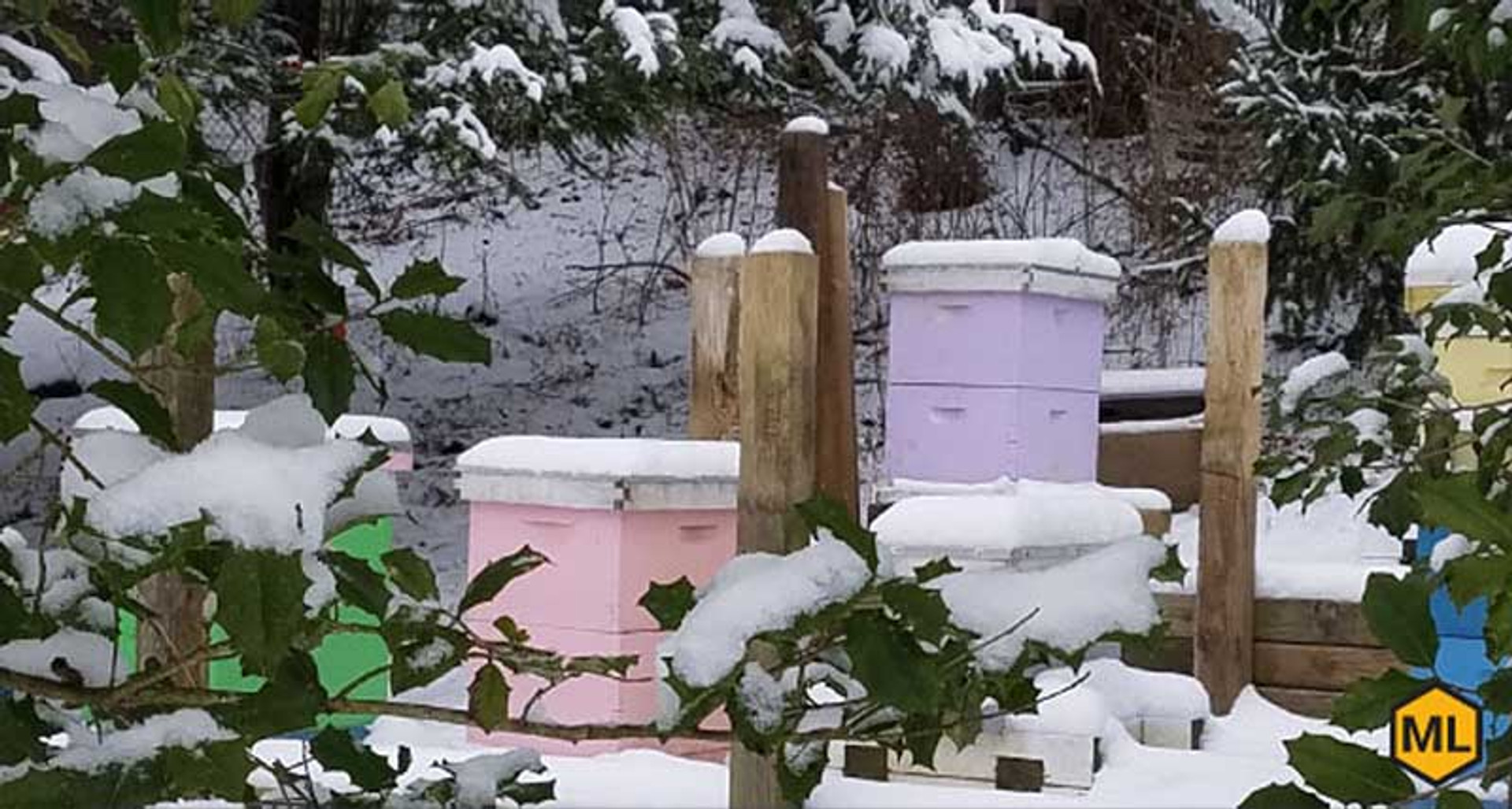
What to Do with Bees in the Winter (and What Not To)
TL;DR: Winter is one of the toughest times for beekeepers and their colonies. Honey bees survive by clustering together for warmth and consuming stored honey, but they rely on beekeepers to set them up for success. By preparing hives properly, you can reduce losses and support strong spring colonies.
- Bees cluster around the queen, generate heat, and depend on honey to survive cold months.
- Climate prep matters: insulate, ventilate, and protect hives from moisture, wind, and flooding.
- Right-size the hive by removing unused supers and arranging frames for easy food access.
- Protect against pests with entrance reducers, mouse guards, and Varroa mite treatments.
- Strong queens, adequate food stores, and choosing the right hive setup are essential for survival.
With cold winter weather upon us, new beekeepers often wonder what to do with bees in the winter. With the right winterizing supplies and preparation, your bees can make it through and be a strong hive come springtime.
How do bees survive winter, and how can beekeepers help keep them warm and toasty until the Spring?
In this guide, we’ll share the beekeeping tasks you should be completing alongside the colony. Here’s all you need to know about keeping your hives set up for success through the cold, dark winter months.
What Happens to Honey Bees in the Winter?
During the cold months, honey bees don’t hibernate the way many animals do. Instead, they form a tight cluster inside the hive. They surround the queen and slowly move their honey stores. This helps them both keep warm and conserve their energy.
Bees can generate heat by vibrating their wing muscles. That behavior keeps the core of the cluster at a survivable temperature. However, it also means they need enough stored honey to fuel their tiny bodies. Without proper preparation, colonies can starve or freeze inside the hive.
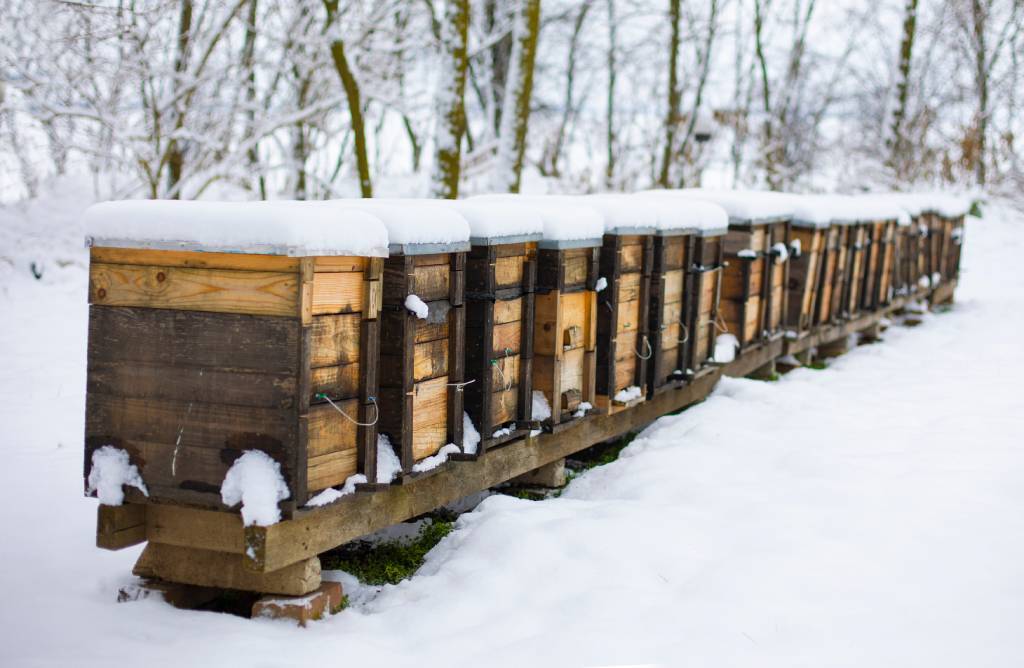
What is Overwintering?
Overwintering is the process of helping a bee colony survive the cold months. Bees cluster to generate heat and reduce activity during cold months. This behavior is how honey bees survive winter’s freezing temperatures.
Beekeepers ensure the hive has enough food, proper insulation, and ventilation while protecting it from moisture, drafts, and pests.
A healthy queen and a strong bee population are crucial for generating warmth. They’re key to ensuring the colony survives until spring.
Know Your Climate
When preparing your beehive for the winter months, it’s important to know what kinds of weather you’re up against. Consider the following when prepping your bee hives in the winter.
Consider Extra Insulation
If your area experiences extremely low temperatures, add extra insulation to your hive. Secure the hive’s lid or add a winter hive cover to protect against fierce winds. Shield any base openings or ventilation holes to prevent drafts from chilling the bees.
Manage Moisture and Snow
If you expect heavy precipitation or flooding, relocate or raise your hives to higher, drier ground for the winter. Snow can act as a natural insulator around bee hives. Still, make sure no excess moisture can seep into the hive and cause humidity buildup.
Plan for Your Region
Being in tune with your local winter weather will help you prepare the hive appropriately. Your bees know what they’re doing instinctively. It’s still important you do your part in fortifying their hive against extreme cold, wind, and moisture.
Set Up the Yard
Take a look at your yard and imagine it’s the dead of winter: Are your hives in the best spot to handle the winter months? Here are a few tips to ensure your setup is winter-ready.
- Make sure your honey bees are in a position that receives plenty of sunlight and as little wind as possible. Consider placing a windbreak or utilizing existing ones, such as a line of trees or shrubs. That extra protection will shield your hive from the bitter winds in your region.
- If you get excess precipitation or flooding through the winter, move your hive to higher, safer ground to keep it dry until spring.
- If you’re expecting a lot of wind gusts, you can secure the hives with rope or bricks. That way, they won’t topple during heavy wind. Wind can damage hives, so if your area is known to be gusty during the winter, plan accordingly.
- Examine the hive’s base and eliminate any excess vegetation. Less vegetation means pests can’t hide beneath the hive or climb up to use it for shelter. Creating a safe, ideal space for the bees will ensure their well-being for the long winter, no matter how chilly it gets.
Using Double Nucs vs Single or Double Deep Hives
The choice between overwintering in double or single deep hives depends on several factors, including:
- Your climate
- The strength of the colony
- Your management preferences.
There are clear benefits to using either option throughout the winter season. We’ll cover each of their main benefits below.
Double Nucs
A double nuc is a beekeeping setup that splits a standard deep hive body into two separate compartments. Each compartment houses a small colony. This setup allows them to share warmth during winter.
The main benefits of this option are:
- Ideal for colder climates and smaller colonies. Shared warmth helps reduce heat loss.
- Easier for bees to cluster and regulate temperature in smaller spaces.
- Good for building up multiple small colonies for spring.
Single Deep Hives
A single deep hive is a traditional beekeeping setup. Essentially, a single, larger colony occupies one deep hive body. This setup provides ample space for clustering and storing food.
The main benefits of this option are:
- Best for stronger colonies, providing ample space for clustering and food stores.
- Simpler to manage, but smaller colonies may struggle to maintain heat.
- Effective in milder climates or for robust colonies.
To summarize, double nucs are better for smaller colonies or colder climates due to the benefit of conserving heat. Single deeps are better for simplifying the management of larger colonies in milder climates.
Reduce Hive Entrances
Weather isn’t the only threat in the wintertime. Rodents and other small creatures and critters looking for a wintertime shelter will see your beehive as the perfect spot. After all, it’s warm, protected, and full of food.
Keep these intruders at bay by making the hive entrance as small as possible. Your bees won’t need a large opening while they’re sheltering for the winter, and it’ll help keep the cold out as well. It’s a win-win!
It’s also worth considering attaching a mouse guard to the hive entrance. Don’t forget to keep an eye on the entrance throughout the season. Ensure it doesn’t get completely covered by snow and trap the bees inside the hive.
Many beekeepers still check in on their bees on mild days throughout winter to ensure their hives are doing well. These brief mid-winter inspections can help you catch any issues early (such as low food or moisture problems). This leads to an increase in the population of healthy bees in the coming months. That can make your beekeeping duties and tasks easier come spring.
Keep Mites Out
Pests can endanger your hive, especially in the winter, and Varroa mites are some of the most formidable enemies to bees. These mites feed on the brood and come in much larger numbers during the fall. Because of this, keeping mites and parasites far away from your honey bees at all costs is critical.
If Varroa invades the hive at this time of year, they can ruin the population of worker bees. That means the colony won’t be able to make as much food ahead of winter. To prevent this, consider treating the colony for Varroa mites. Make this treatment part of your winter preparations so your bees are protected throughout the season.
Treating Hives - Avoiding Treatments that Require Evaporation
Some medications and treatments, such as Formic Pro Varroa, are not recommended for use in winter. That’s because it relies on evaporation, which requires temperatures between 15°C and 30°C.
In colder weather, they become less effective. Likewise, opening the hive could disturb the bees during clustering, risking their survival.
It's better to apply treatments like Apilife Varroa in late summer or early fall. For winter, consider using an Oxalic Acid Vaporizer. It is safer and more effective for colder temperatures, especially when the colony is broodless.
Be sure to check our guide on Oxalic Acid Vaporizer Treatment for Bees to learn more.
Remove Excess Space
Extra space in your hive makes it drafty and more difficult to keep warm. Make your hive better fit the colony within it by removing extra supers. You can also use follower boards to make the hive area smaller, especially if you use a top bar hive.
A smaller hive size keeps your honey bees warmer throughout the winter. Plus, it also leaves less room for intruders to enter. Try to create a safe, small space for your bees to spend the next few months that is dry, ventilated, and warm.
While arranging your beehive, make sure the honey frames are positioned so the bee cluster will have easy access to food throughout the season. Proper arrangement of the honey frames is critical for your winter prep.
Your goal should be to reduce excess space and organize the hive properly. If successful, you’ll help your honey bees stay warmer and use their food efficiently throughout the winter.
Maintain Beekeeping & Hive Equipment
Now is the best time to inspect and fix any equipment needing attention. Ensure all your boxes, boards, and covers are in good shape and can keep the worst of the weather out.
Clean anything that needs it, and make any necessary repairs or replacements to your beekeeping equipment and supplies. If there’s any equipment you don’t need during the winter, ensure it’s clean and in good condition. Then, consider storing it somewhere safe.
Insulate the Hive
Your honey bees will cluster together and warm the colony. You can help them by preparing the hive for extremely cold temperatures. Wrapping the hive keeps out strong winds, and black roofing felt can absorb warmth on sunny winter days.
Foam insulation boards can also keep drafts out and warmth in, but be careful when covering hives. Ventilation is just as important as insulation. Too much moisture buildup inside the hive leads to deadly condensation or dysentery.
To avoid excess moisture, ensure plenty of air can come in and out through the bottom and top of the hive. This creates cross-ventilation and keeps humidity levels low for the honey bees.
Consider Using a Hot Box
Hot boxes are also known as insulated or "winter" boxes. They are specially designed enclosures used to help honey bee colonies survive cold winter conditions. These boxes create a more stable environment by providing additional insulation, which helps regulate the temperature inside the hive.
The goal of a hot box is to reduce heat loss. This will minimize the energy the bees need to expend in keeping the hive warm.
How to Use Hot Boxes in Winter:
- Install Insulation: Wrap or place an insulated box around the hive to trap heat.
- Ventilate: Ensure there's airflow to prevent condensation but avoid drafts.
- Positioning: Shield the hive from wind and raise it off the ground if needed.
- Feed the Bees: Monitor food stores, supplement with sugar if needed.
- Check the Hive: Occasionally inspect for moisture and insulation on mild days.
Hot boxes help bees conserve energy and improve winter survival. Check out our 10 frame hot box and moisture board, and help keep your bees safe this season.
Importance of Hive Ventilation
Hive ventilation in winter is crucial for maintaining colony health. While it may seem counterintuitive, proper airflow helps prevent moisture buildup, which can harm bees more than cold temperatures.
Here are the main three reasons why ventilation is important for winter bee health:
- Moisture Control: Bees generate moisture through their activity, and without ventilation, condensation forms inside the hive. This cold, dripping water can chill and kill bees.
- Preventing Mold and Fungus: Excess humidity promotes mold and fungus growth, which can damage the colony and comb.
- Carbon Dioxide Regulation: Proper ventilation ensures fresh air circulates, preventing carbon dioxide buildup and maintaining oxygen levels.
To ensure your bees have the proper ventilation, use a top entrance and an inner cover with ventilation holes. The right cover will absorb moisture while allowing airflow. Avoid large gaps that may introduce drafts. You can also consider setting up a windbreak around your hives to help reduce wind exposure.
Keep a Healthy Queen
A healthy, laying queen is vital to your colony’s survival. While you’re preparing your hive for winter, ensure the queen is strong and has a healthy brooding pattern. If this isn’t the case, you have some options.
You can requeen the colony, but be sure to keep the old queen alive until you’re sure the new one is accepted. You can also consider combining the colony with another one. Putting a weak or queenless colony with a strong one improves its survival chances for the winter. The smaller colony often accepts the new colony’s queen with ease.
Combining colonies might be a good idea anyway. Larger colonies will have a stronger, warmer cluster, more food stored, and a better overall chance of survival. Many beekeepers combine hives (especially smaller ones) to help them have a better chance of surviving the winter.
Just remember to never combine two weak hives. Always put a weak hive with a stronger one to increase the chances of the weak hive getting back on its feet. You should also ensure that the stronger colony has enough food stores to feed the weaker colony all winter as well.
Provide Enough Food
Before winter hits, ensure your hive has enough food to last through the season. The amount of food that bees need depends on the climate and the colony’s overall health. Still, remember that honey bees eat a lot in winter to stay warm and survive the cold temperatures.
If it looks like there isn’t enough honey to keep the colony alive through the winter, it’s time to set up feeders. Providing a nectar or pollen substitute ensures your bees have the energy to stay warm. You can also offer sugar syrup or pollen patties to boost vitamins and minerals for your honey bees.
Common Winter Beekeeping Mistakes (What Not To Do)
Now that you know what to do with bees in the winter, it’s important to understand what not to do. Here are a few of the most common overwintering errors we’ve seen. Take note of these common mistakes so you can avoid them this winter.
DON’T Over-seal the Hive
Don’t cut off all ventilation in an effort to keep the hive warm. A completely sealed hive traps moisture, causing condensation that can drip on and chill your bees. Always ensure there is some ventilation, even while insulating.
DON’T Skip Mite Treatments
Failing to treat for Varroa mites before winter can doom a colony. High mite loads will weaken the bees and shorten their lifespan. Do not head into winter without addressing mite control in the fall!
DON’T Disturb the Winter Cluster
Avoid opening the hive or moving frames on very cold days. Breaking the bee cluster can release vital heat and expose bees to lethal cold. Only check your hives on occasional warm days and only when necessary.
DON’T Leave Too Much Empty Space
Don’t leave on empty supers or too many boxes that the bees can’t occupy. The colony may struggle to heat the excess space. Reduce the hive to an appropriate size for the colony so they can maintain warmth.
DON’T Use a Queen Excluder with Winter Supers
If you leave a honey super on for winter, remember to remove the queen excluder. Otherwise, the cluster might move up into the super and leave the queen behind. That can be fatal for your queen.
Frequently Asked Questions about Honey Bees in Winter
Can I leave a honey super on over winter?
You can leave a honey super on through winter if it contains enough capped honey for the bees’ food stores. However, remove any mostly empty supers to reduce the space the colony needs to heat. Also, if you use a queen excluder, take it out so the queen isn’t separated from the winter cluster.
What to do with uncapped honey in the winter?
Uncapped honey (which has a high moisture content) can ferment or chill the hive if left over winter. It’s best to remove any frames of uncapped honey before winter. You can feed that unripe honey back to your bees using an appropriate feeder. You can also save it and return it once the weather warms up and the bees can use it.
Can I move a beehive in the winter?
Moving a beehive in winter is possible, but should be done with care. Bees are clustered and relatively inactive in cold weather. If you must move a hive, do it on a milder day and handle the hive gently to avoid disturbing the cluster. Moving them only a short distance will cause less confusion than a long-distance move.
What temperature is too cold for bees?
Honey bees cannot fly once temperatures drop below about 50°F, and they stay in a tight cluster for warmth. Extended periods below freezing are stressful for the colony, especially if they run out of food. Generally, any temperature much below 40°F is too cold for bees to break cluster. At those temperatures, they must remain bundled together to survive.
How do I winterize my bees?
To winterize your bees, make sure their hive is prepared for the cold. Ensure they have plenty of honey (or provide sugar syrup/fondant) and reduce the hive’s space so the bees can heat it efficiently. Insulate the hive and protect it from wind, but also maintain ventilation to prevent moisture buildup. Finally, treat for pests like Varroa mites before winter so the colony enters the cold season in a healthy state.
The Final Buzz on Keeping Honey Bees Warm in the Winter
Honey bees are amazingly hard workers. A successful colony has a large honey supply and a strong population to make it through the cold season. These tips will help keep your busy little friends around for another fruitful year.
Take the necessary steps to prepare your honey bees for winter, and you’ll be able to rest easy. You’ll know that you’ve done everything you can to help them survive. Before you know it, you’ll be back out in the yard checking on them, and spring will have sprung!
A strong winter leads to a strong hive. Explore tools to get your bees through the cold months and beyond!