
Types of Honey Bees & Their Behavior
Understanding Types of Honey Bees & Their Behavior
TL;DR: This chapter explains the major types of honey bees, how their behavior differs, and why those differences matter for new and experienced beekeepers alike. Readers will discover how traits like temperament, climate adaptability, honey production, and swarming tendencies influence hive management and overall colony health.
- The distinctions between global Apis species and why Apis mellifera is the primary bee used in modern beekeeping.
- How swarming functions as a natural reproductive behavior and varies across different honey bee types.
- Detailed profiles of common A. mellifera subspecies—Italian, German, Caucasian, Carniolan, and Western honey bees.
- Overviews of important hybrid stocks such as Buckfast, Russian, Africanized, and Minnesota Hygienic bees.
- Practical comparisons to help beekeepers choose the right honey bee strain for their climate, experience level, and management style.
Understanding the different types of honey bees is one of the most important steps in becoming a confident beekeeper. Characteristics such as temperament, disease resistance, productivity, location, and other unique traits or behaviors set each group apart. These differences can greatly influence hive health, honey production, and day-to-day management.
Many groups, also known as bee stock, have traits in common with each other, so this is only a loose category. However, bee stocks provide a useful means of understanding and classifying differences among honey bee strains.
In this chapter, we’ll explore the major types of honey bees found in modern beekeeping. We’ll begin with the well-known Apis mellifera subspecies, then discuss a few unique hybrid stocks. Read on to learn to find the information you need to choose the right bees for your apiary.
An Overview of the Honey Bee Species
Honey bees are described as any group of insects in the Apidae family that produces honey. They often refer to any one of the seven different members of the genus Apis, and the domesticated honey bee genus Apis mellifera.
All Apis species except A. mellifera are located in parts of southeastern or southern Asia.
Some examples include:
- The dwarf honey bee (A. florea), which creates its hive in shrubs and trees.
- The giant honey bee (A. dorsata), which builds its combs up to 9 ft in diameter in southeastern Asia.
- The black dwarf honeybee (A. andreniformis) is native to southeastern Asian forests.
- The Eastern honey bee (A. cerana) has been domesticated in some areas in southern and southeastern Asia.
These examples show just how varied wild and regional honey bee species can be.
Meet Apis mellifera: The Most Common Type of Honey Bee
The A. mellifera breeds of honey bees measure about 1.2 cm long, depending on their specific subspecies strain. Different strains also feature various midsections, heads, and thorax colors.
Generally, they are red or brown with black and orange-yellow rings on their abdomen. They are typically seen with hair on their thorax and little hair on their midsection. These bees also have a pollen basket on their hind legs, which is often brown or black.
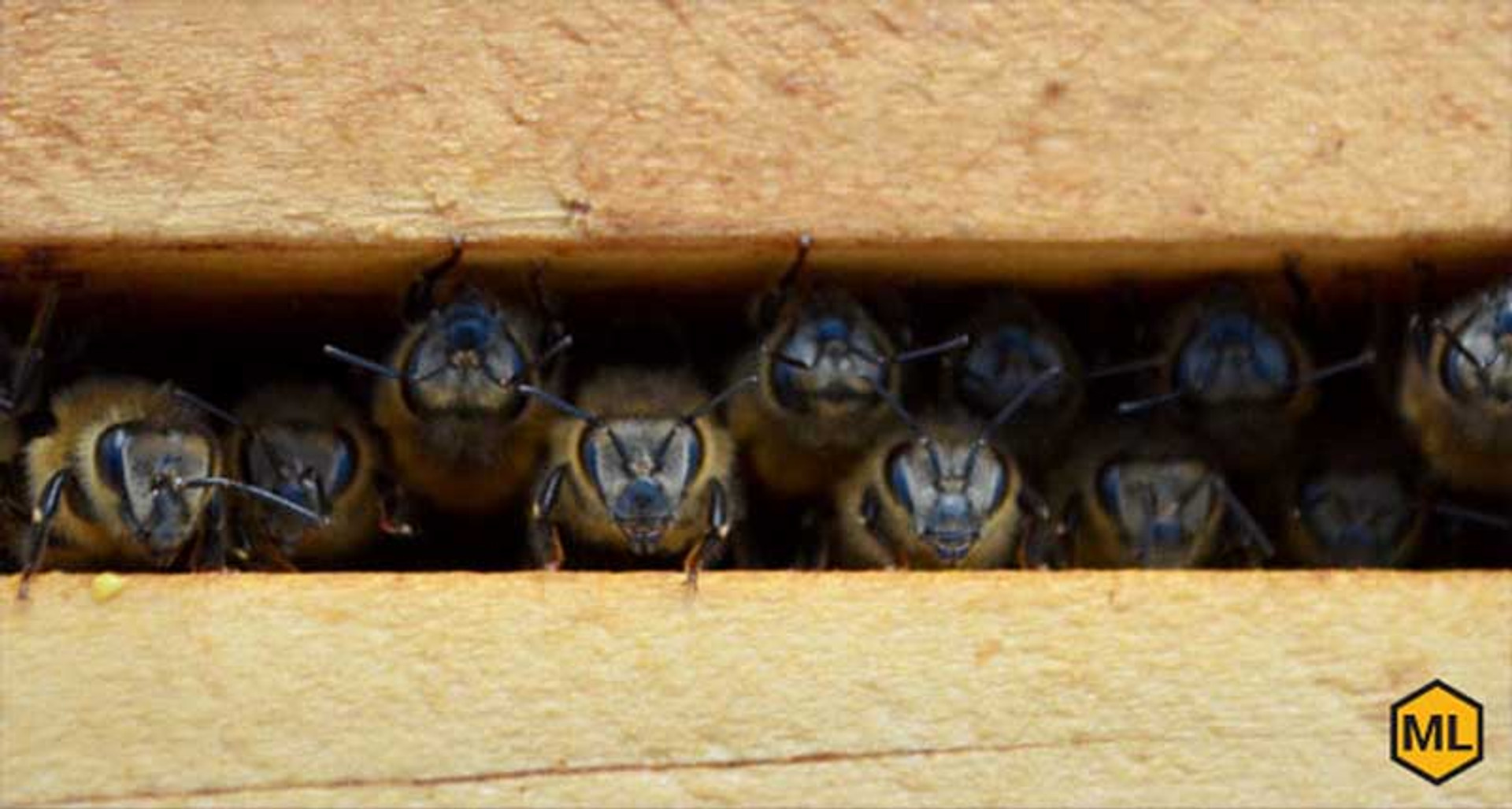
On top of their heads are two large compound eyes and three simple eyes known as ocelli. These sets of eyes contribute to their keen eyesight. They also have two odor-detecting antennae that are extremely useful in carrying out their day-to-day tasks.
Currently, there are 26 recognized A. mellifera species, each having different molecular and morphological characteristics. Each of these subspecies also differs in its agricultural output, considering its current environmental conditions.
For instance, some types of honey bees can survive warmer climates while others adapt well to the cold. They also vary in their defensive behaviors, coloration, wingspan, and tongue length.
However, most honey bees are endothermic, which means they can warm their bodies and the hive temperature by putting their flight muscles to use.
Understanding Swarming Behavior
Swarming is a natural part of honey bee behavior and one of the primary ways colonies reproduce. When a hive becomes crowded or conditions shift, the queen and roughly half the workers leave to form a new colony. While swarming is normal, it can reduce honey production and weaken the original hive if it happens unexpectedly.
Because different types of honey bees vary in their swarming tendencies, beekeepers often choose stock that fits their management style. We’ll explore a little more on how to recognize, prevent, and manage swarms in Chapter 7.
Different Types of Honey Bees
Although many honey bee species exist worldwide, today’s beekeepers primarily work with A. mellifera. Over time, this species has developed into several regional subspecies. These different types of honey bees vary in gentleness, swarming tendencies, honey production, and disease resistance.
The profiles below will help you understand what makes each one unique.
The Italian Honey Bee (Apis mellifera ligustica)
Italian honey bees are one of the most popular types of honey bees among beekeepers. The Italian honey bee breed originated in Italy but was introduced to the United States in 1859. They’re popular among beekeepers for their longer brood-rearing periods, high honey production rates, and gentle honey bee behavior. They’re also less prone to bee swarming than many other strains.
The Italian bee has a very light, visually pleasing color, making it easy to identify. Of course, like any creature, the Italian bee has its downsides. Its extended brood cycles mean this bee consumes its resources quickly.
Italian honey bees are also famous for robbing honey stores from nearby weaker hives, which makes it easy for diseases to spread from hive to hive.
Italian Honey Bee At-a-Glance
- Origin: Italy; imported to the U.S. in the mid-1800s
- Temperament: Very gentle; ideal for beginner beekeepers
- Climate Adaptability: Thrive in warm climates; less suited to long, cold winters
- Honey Production: High; long active season increases yields
- Swarming Tendency: Low compared to other types of honey bees
- Disease Resistance: Moderate; robbing behavior increases disease spread risk
- Unique Traits: Light golden color; excellent brood production; strong foragers
- Bee Hive Maintenance Notes: Requires careful monitoring of food stores and robbing behavior
This type of honey bee may be for you if:
You want gentle bees with high honey production, live in a warm climate, and prefer colonies that are easy to manage with low swarming tendencies.
The German Bee (Apis mellifera mellifera)
German honey bees, originally found in Germany, the United Kingdom, and Scandinavia, are a hardy honey bee species.
They’re known for their ability to survive colder climates and harsh winters. They also have smaller and stockier bodies than other honey bees, and they boast a black or dark brown coloring, so much so that they’re sometimes known as the German Dark Bee or “black” bee.
Because of their defensive nature, German bees aren’t as popular among beekeepers as they used to be. This, combined with a higher disease susceptibility, damaged German bee populations, making them one of the rarer subspecies of honey bees today.
German Bee At-a-Glance
- Origin: Germany, Scandinavia, and the U.K.
- Temperament: Defensive and more aggressive than other types of honey bees
- Climate Adaptability: Extremely cold-hardy; thrives in harsh winters
- Honey Production: Moderate
- Swarming Tendency: Moderate to high
- Disease Resistance: Low; historically prone to disease outbreaks
- Unique Traits: Dark coloration; stocky body structure
- Bee Hive Maintenance Notes: Requires experienced handling and strict disease checks
This type of honey bee may be for you if:
You live in a cold region and want bees that withstand harsh winters—and you feel confident working with a more defensive, high-maintenance hive.
The Caucasian Bee (Apis mellifera caucasia)
The Caucasian bee is another gentle-natured subspecies. You can identify Caucasian bees by their large, hairy bodies, dark or gray color, and long tongues. These longer tongues help them forage nectar from flowers that other bees can’t access, helping the pollination process along the way.
Despite this, it takes them longer to build their hive in the spring. They also create and use a lot of propolis, otherwise known as bee glue, making it harder to work within the hive. This causes Caucasian bees to have a lower honey production than their brethren, and as such, they’ve fallen out of most beekeepers’ favor.
Caucasian Bee At-a-Glance
- Origin: Caucasus Mountains
- Temperament: Gentle and calm
- Climate Adaptability: Performs well in cooler climates
- Honey Production: Lower than average; slower spring buildup
- Swarming Tendency: Moderate
- Disease Resistance: Good; strong hive hygiene
- Unique Traits: Exceptionally long tongues; heavy propolis producers
- Bee Hive Maintenance Notes: Excess propolis requires more frequent cleaning
This type of honey bee may be for you if:
You want gentle bees with great foraging reach due to their long tongues, and you don’t mind frequent hive cleaning caused by excess propolis.
The Carniolan Bee (Apis mellifera carnica)
Carniolan bee hives boom in the springtime, giving beekeepers a productive and growing hive before summer begins. The Carniolan honey bee comes from middle and Eastern Europe, making it better at surviving the winter in colder climates.
Much like the Caucasian honey bee, Carniolan bees also have an extremely docile nature. That is why the Carniolan honey bee is extremely popular among beekeepers.
The Carniolan bee is small compared to other European honey bees, and the large amount of hair on its body gives it a dark or gray color. Unfortunately, the explosive productivity in spring makes this bee stock prone to swarming, which can result in a poor honey crop as the colony splits in half partway through the season.
Carniolan Bee At-a-Glance
- Origin: Central and Eastern Europe
- Temperament: Extremely gentle; ideal for beginners
- Climate Adaptability: Very cold-hardy; excellent spring buildup
- Honey Production: High early-season production
- Swarming Tendency: High — known for rapid colony expansion
- Disease Resistance: Good overall
- Unique Traits: Dark/gray color; heavy hair; highly efficient foragers
- Bee Hive Maintenance Notes: Requires active swarm prevention strategies
This type of honey bee may be for you if:
You live in a cooler climate, want very gentle bees, and are prepared to manage higher swarming tendencies during the spring buildup.
The Western Honey Bee (Apis mellifera Linnaeus)
One of the most common types of honey bees worldwide, the Western honey bee is also eusocial, having one queen, multiple workers, and a few drones in its colony.
Being one of the first domesticated insects, Western bees are a beekeeper’s favorite breed due to their excellent honey production and pollination capabilities.
While these honey bee species have occupied every continent except Antarctica, they are now listed as “Extinct” on the International Union for Conservation of Nature (IUCN) Red List of Threatened Species. However, further research is required to determine whether this refers to wild or non-wild colonies across Europe.
Western Honey Bee At-a-Glance
- Origin: Originally Europe, Africa, and Western Asia; now global
- Temperament: Generally gentle, depending on local strain
- Climate Adaptability: Adapts to nearly any climate
- Honey Production: High; primary commercial species worldwide
- Swarming Tendency: Moderate
- Disease Resistance: Variable depending on strain
- Unique Traits: Most common domesticated honey bee; key global pollinator
- Bee Hive Maintenance Notes: Monitor regularly for mites and brood diseases
This type of honey bee may be for you if:
You want a widely adaptable, productive bee strain suitable for many regions and are comfortable performing routine hive checks for disease and mites.
Hybrid Honey Bee Stock: Modern Breeds & Behavioral Traits
Some of the different types of honey bees are hybrids of multiple species. Scientists bred these modern honey bees to achieve or combine desirable traits, such as higher disease resistance, lower aggression, and better productivity.
Here are some of the most notable hybrid bee stocks:
The Buckfast Bee
Named after Buckfast Abbey in Devon, UK (where this bee stock originates), Buckfast bees result from cross-breeding the strongest bee colonies in the area. As a result, these bees thrive in cold, wet climates, so they quickly grew in popularity across the British Isles.
Buckfast bees are great housekeepers, keeping the hive clean and exhibiting excellent grooming behaviors that allow them to reduce the risk of disease. They have a moderate temperament but can become fiercely defensive of their hive if left to their own devices for a couple of generations.
Buckfast Bee At-a-Glance
- Origin: Buckfast Abbey, Devon, UK
- Temperament: Moderate; can become defensive after generations
- Climate Adaptability: Excellent in cold, wet climates
- Honey Production: High; strong housekeeping boosts colony health
- Swarming Tendency: Moderate
- Disease Resistance: High; bred for strong hygienic behavior
- Unique Traits: Exceptional grooming habits; low parasite load
- Bee Hive Maintenance Notes: Re-queen regularly to prevent rising aggression
This type of honey bee may be for you if:
You want hardy bees with strong disease resistance and housekeeping behavior, especially in wetter or cooler climates.
The Russian Bee
The Russian bee hails from the Primorsky Krai region of Russia. The United States Department of Agriculture introduced them to the country in 1997. An increasing amount of bee colonies collapsed due to damage from parasites, so the USDA brought in Russian honey bees in response.
These honey bees have a natural tolerance to varroa and tracheal mites—two of the honey bee’s most harmful parasites. Unfortunately, this tolerance quickly decreases once Russian honey bees cross with other stock.
They also have a few behaviors that set them apart from other bee strains. For example, Russian bees always have queen cells in their hive, unlike other types that only build queen cells when it’s time to raise a new queen. Scientists continue to learn about Russian bees and their unique behaviors, so most beekeepers don’t have access to them.
Russian Bee At-a-Glance
- Origin: Primorsky Krai region of Russia
- Temperament: Moderate; may vary with genetic mixing
- Climate Adaptability: Cold-hardy; suited to northern climates
- Honey Production: Moderate; buildup depends on nectar flow
- Swarming Tendency: High; frequent queen cell production
- Disease Resistance: Strong resistance to varroa and tracheal mites
- Unique Traits: Always maintain queen cells; highly adaptive behavior
- Bee Hive Maintenance Notes: Keep colonies purebred for mite resistance
This type of honey bee may be for you if:
You want bees with natural mite resistance and live in a colder region, and you’re comfortable managing their higher swarming tendencies and queen-cell behavior.
The Africanized Bee
Also known as the Killer Bee, the Africanized bee is a misunderstood strain. To begin with, this bee stock comes from Brazil, not Africa. Africanized bees were created to increase parasite resistance and honey production. However, several swarms of the hybrid stock escaped quarantine and have since spread across South America.
Many beekeepers don’t work with Africanized bees due to their extremely high aggression. On the other hand, these bees have many advantages once one learns how to work with them. They start foraging at a younger age and reproduce faster than other bee stock, which leads to high rates of honey production.
Africanized Bee At-a-Glance
- Origin: Brazil; hybrid spread throughout the Americas
- Temperament: Extremely defensive; not suitable for beginners
- Climate Adaptability: Thrives in warm and tropical environments
- Honey Production: High; fast brood cycles
- Swarming Tendency: Very high; frequent colony migration
- Disease Resistance: Strong; robust colony turnover
- Unique Traits: Early foraging age; rapid reproduction
- Bee Hive Maintenance Notes: Only for experienced beekeepers with proper precautions
This type of honey bee may be for you if:
You are an experienced beekeeper in a warm climate and can safely manage highly defensive colonies that produce large amounts of honey.
Minnesota Hygienic Bee
As the name suggests, the Minnesota Hygienic bee has extraordinary housecleaning skills. Their hygienic behavior gives them better resistance to diseases.
They’re also good honey producers, making them another popular choice among beekeepers. Unfortunately, they share many of the poor qualities of the Italian bees they were bred from.
Minnesota Hygienic Bee At-a-Glance
- Origin: University of Minnesota breeding program
- Temperament: Gentle to moderate
- Climate Adaptability: Performs well in cold climates
- Honey Production: High; similar to Italian bees
- Swarming Tendency: Moderate
- Disease Resistance: Excellent; strong hygienic behavior reduces pathogens
- Unique Traits: Known for exceptional housekeeping
- Bee Hive Maintenance Notes: Continue routine inspections despite strong hygiene traits
This type of honey bee may be for you if:
You want strong disease resistance paired with good honey production and live in a region with colder winters.
Choosing the Right Type of Honey Bee for Your Hive
Like all creatures, every type of honey bee has positive and negative characteristics. However, if you learn how to work with the unique behaviors of a certain bee strain, you can make the most of the benefits they have to offer.
Understanding your bees makes it easier to choose a home they’ll thrive in. Here’s how to find the perfect hive location.
Shop honey bees today!