
7 Ways to Tell If It's Time to Harvest Honey
Knowing when to harvest honey is one of the most exciting—and important—steps for any new beekeeper. Harvest too early, and your honey may ferment; harvest too late, and you risk robbing your bees of essential food. This guide outlines the key signs that show your honey is ready for extraction.
- Most honeycomb cells are capped with wax, indicating the honey is cured.
- The shake test shows no nectar dripping from uncapped cells.
- Moisture content is around 18% or less (use a refractometer for accuracy).
- Nectar flow has ended, usually late summer or early fall.
- Honey supers feel heavy, signaling frames are full of dense honey.
- Colonies have surplus stores beyond what bees need for winter survival.
- Bees are sealing comb and no longer bringing in much fresh nectar.
The first honey harvest is a thrilling milestone for a new beekeeper. Finally, you can reap the sweet rewards of all your hard work! But when should you harvest honey to ensure it’s high quality (and that your bees have enough)?
Timing is crucial, considering how often you harvest honey. The majority of beekeepers only extract honey once each year.
The key is to wait until the honey is fully “ripe.” Typically, the best time to harvest honey is late summer or early fall. However, if it’s your first time, it can still be nerve-racking to determine what ripe honey really looks like.
Below, find seven clear signs that you should harvest honey from the hive.
1. Most Honey Cells Are Capped
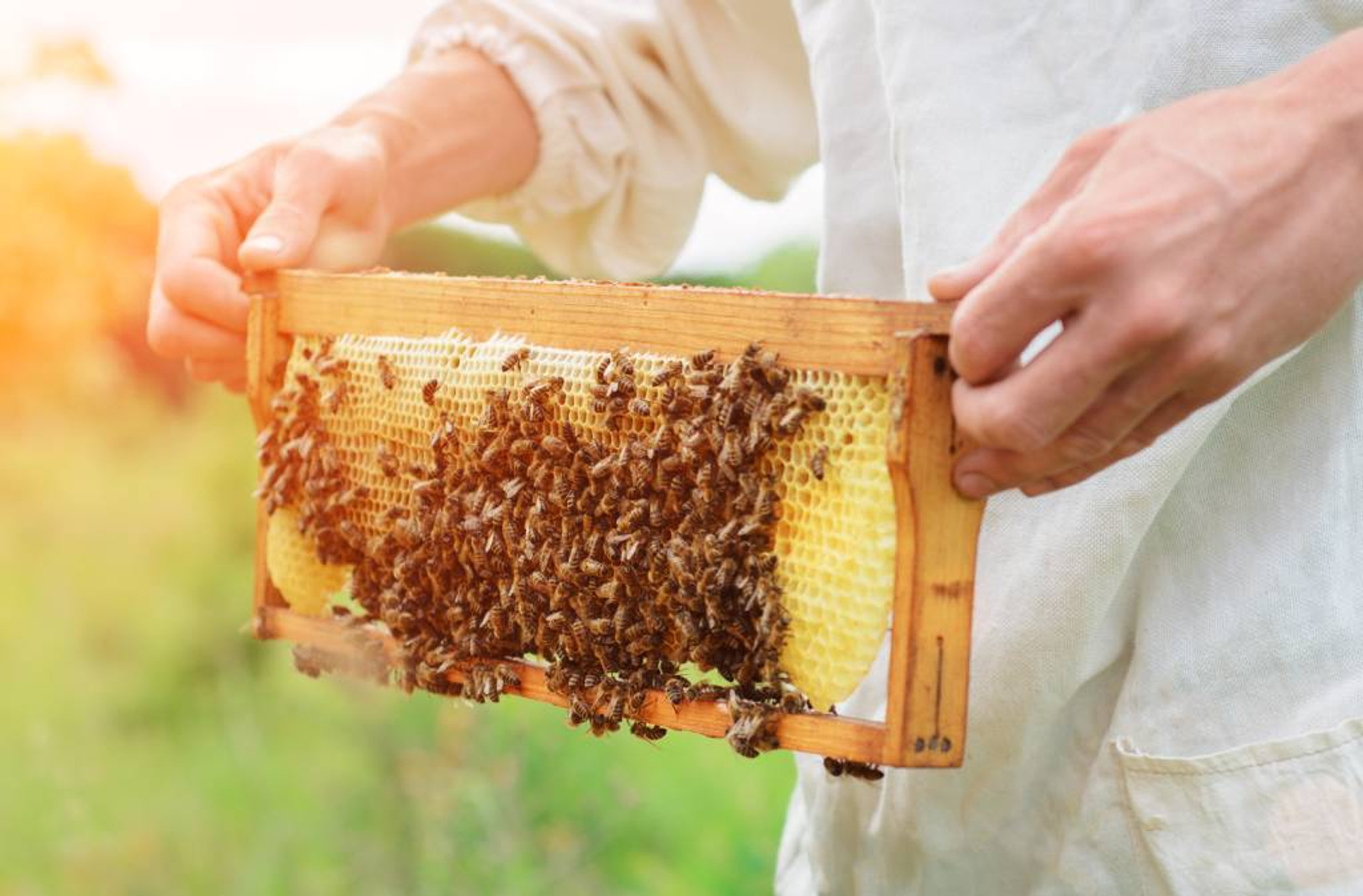
Your bees will cap their honeycomb cells with wax once the honey inside is fully cured. Check your frames for wax-capped comb. A good rule of thumb is to wait until roughly 80 to 90% of the cells on a frame are capped before harvesting.
If a cell is uncapped, the honey is likely still too wet. Honey should be low-moisture at the time of harvest.
2. No Nectar Drips Out
Another way to tell when to harvest honey is to try the shake test. Lift a frame and gently shake it over the hive. If no liquid drops out of the uncapped cells, it means the honey is thick and dry.
If nectar does drip out, the honey is not cured yet. Leaking nectar is more likely to ferment upon harvest, which is not what you want!
3. Moisture Content Is Low
Ripe honey has a moisture content of about 18%. Beekeepers sometimes use a refractometer to measure the honey’s water content before harvesting. Honey is ready to bottle when it measures about 18% or less water (and definitely below ~20% maximum). Capped honey is reliably in the safe range.
4. Nectar Flow Has Ended
The best time to harvest honey is at the end of the major nectar flows for your region. Typically, this is late summer or early fall when plants stop producing abundant nectar. Harvesting after the final flow ensures the honey is definitely surplus. You’ll have the assurance that your bees have the stores they need to make it through the winter.
5. Honey Supers Feel Heavy
If your honey supers feel quite heavy when you lift them, that’s a sign they are filled with cured honey. For reference, a fully filled deep frame can hold around 6 pounds of honey. Heavy, overflowing frames mean your bees have made a large crop that’s ready for extraction.
6. There Is Surplus Honey
Always make sure the colony has plenty of honey for itself before you take any! It’s important to note that new hives often produce little to no surplus their first year. Be sure to leave enough honey behind to feed the colony through winter. That’s essential in cold climates where bees might need 60 or more pounds of honey to make it through.
7. Bees Are Finishing Their Work
By the end of the season, your bees will instinctively cap all the comb. You’ll also notice that they aren’t bringing in much new nectar. When the bees are mainly focused on sealing up the honey cells, it’s generally safe to take the honey.
Harvest Honey Like a Pro
Harvesting only when the honey is fully ready will give you the best-tasting, longest-lasting honey. More importantly, it will keep your colony strong.
So, is it time to harvest your honey? Explore our extracting and bottling equipment today!