
Common Bee Illnesses, Pests, & Diseases
Bee Illnesses: 6 Common Pests & Diseases
TL;DR: Even the healthiest hives face threats from microscopic pests and diseases that can lead to colony collapse. This guide identifies the six most common bee illnesses and outlines actionable strategies to detect, treat, and prevent them before they destroy your apiary.
- The #1 Threat: Varroa Mites are the leading cause of hive failure; monitor using alcohol washes and treat immediately if infestation levels exceed 3%.
- Opportunistic Pests: Keep colonies strong to defend against Small Hive Beetles and Wax Moths, which primarily target weak hives and stored equipment.
- Disease Detection: Learn to identify warning signs like the "ropy slime" of American Foulbrood or the dysentery associated with Nosema.
- Integrated Pest Management (IPM): Use a tiered defense strategy—starting with sun exposure and screened bottom boards—and only apply chemical treatments when necessary.
You have built your hive, installed your package, and successfully prevented them from swarming. Your colony looks strong, and the bees are buzzing happily. But inside the dark, warm environment of the hive, microscopic threats may be lurking.
New beekeepers often ask: "Do bees carry diseases?" The unfortunate answer is yes. Like any living thing, honey bees are susceptible to a variety of viruses, bacteria, and pests. Understanding bee illnesses is key to becoming the best possible steward for your colony.
In this chapter, we will break down the 6 most common threats you may encounter as a new beekeeper. We will start with the single biggest enemy of the modern honey bee: the Varroa Mite.
1. Varroa Destructor (Varroa Mites)
If you only remember one thing from this chapter, let it be this: Varroa mites are the leading cause of colony collapse. These reddish-brown bee parasites are essentially external ticks that attach themselves to adult bees and developing brood. They feed on the bee’s fat bodies (an organ similar to the liver), weakening their immune systems.
Worse, Varroa mites act as a vector for viruses. They can inject deadly pathogens, such as Deformed Wing Virus (DWV), directly into bees' blood. Knowing how to identify these pests could save your entire apiary.
Identifying Varroa Mites
The tricky part of identifying Varroa mites is that you rarely see them until the infestation has grown severe. By the time you notice mites crawling on the backs of your bees, your colony is already in severe danger. That’s why we recommend testing for them, not merely relying on visual identification.
Try the Sugar Shake or Alcohol Wash method. Take a sample of ½ cup of nurse bees (equivalent to approximately 300 bees). Wash them to dislodge the mites. You then count the mites to determine a percentage.
A count of 3 mites per 100 bees (or 9 mites total in a 300-bee sample) usually signals that immediate bee mite treatment is necessary.
Bee Mite Treatment
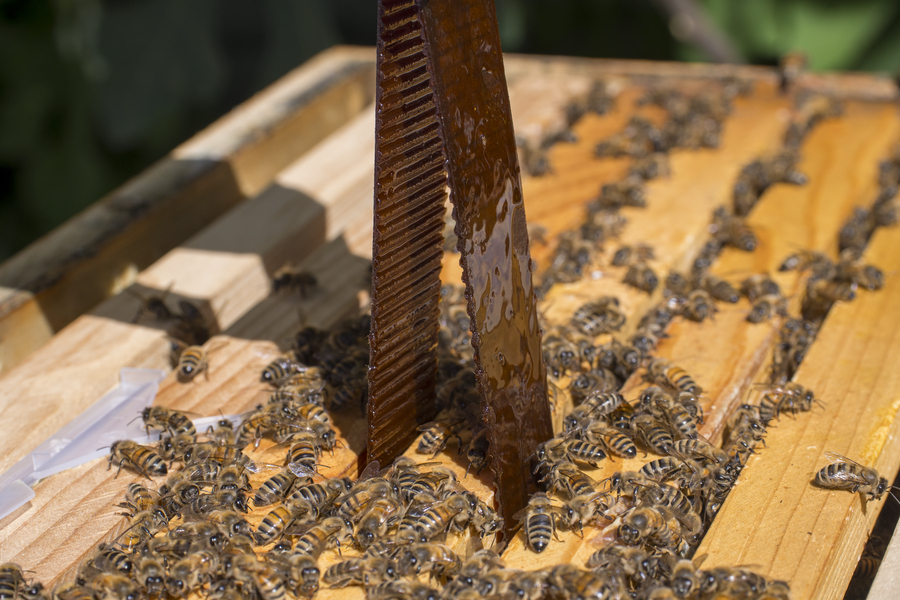
Deciding when to treat bees for mites depends on your location. The season and temperature may also be considerations.
Treatments generally fall into two categories:
- Organic Acids: Such as Oxalic Acid (vapor or dribble) and Formic Acid. These are popular natural options but require specific temperature ranges to be safe.
- Synthetic Miticides: Chemical strips like Apivar that are hung in the hive.
Always rotate your treatments to prevent mites from building resistance. A proper bee hive treatment plan often involves treating in the spring before honey flow and in late summer after the harvest to ensure healthy winter bees.
2. Small Hive Beetles (SHB)
Small Hive Beetles are black, oval-shaped beehive pests that originated in Africa. They are now common across the United States.
When it comes to small hive beetles, the problem isn’t the beetles themselves, but their larvae. Adults lay eggs in cracks within the hive. When the larvae hatch, they burrow through the comb, eating honey, pollen, and sometimes even brood.
As they eat, the beetle larvae defecate in the honey, causing it to ferment. It becomes slimy and develops a foul smell.
The good news is that these beetles are opportunistic pests and will only overtake a weak hive. Keeping your colony strong and condensing space is the best prevention. You can also use beetle traps filled with oil or Swiffer sheets to trap the adults before they can lay.
3. Wax Moths
Like small hive beetles, wax moths are scavengers that look for an easy opportunity to strike. When an opportunity arises, the moth enters the hive and lays eggs on the comb. The larvae tunnel through the wax, spinning sticky webs that ruin the frames and trap brood in their cells.
However, wax moths are rarely a true threat to a strong hive. They usually move in after a colony has already died or weakened significantly. The best prevention is to keep strong colonies.
Prevention tip: Freeze your drawn comb frames for 24 hours before storing them for winter to kill any lingering wax moth eggs.
4. American Foulbrood (AFB)
AFB is a highly contagious bee disease that attacks the brood. Technically, it is a bacterial infection.
The first sign is that the brood pattern will appear “spotty.” Typically, the cappings on the cells will look sunken and dark. You might also notice that the surface of the cappings appears oily. If you poke a toothpick into a cell and pull it out, the larvae will rope out into a brown, mucus-like slime.
In some cases, you can smell American Foulbrood before you see it. The scent is distinctive and unpleasant, especially once you expose infected larvae. Most describe it as a rotting scent.
Unfortunately, there is no cure for American Foulbrood, and AFB spores can survive for decades on equipment. If your hive tests positive for AFB, the standard protocol is to burn the hive, including all bees and equipment. If not, it can spread to other apiaries and cause a widespread event.
5. Chalkbrood
Chalkbrood is a fungal disease that turns bee larvae into hard, white, chalk-like mummies. When this fungus sets in, you will often see white or grey "mummies" on the landing board or bottom board of the hive. They end up there because the housekeeping bees throw them out.
There is no chemical honey bee treatment for Chalkbrood. It is usually stress-related and can be caused by unusually cold, wet springs. The best cure is to keep the hive well-ventilated and placed in a warmer, sunny location.
If the problem persists, requeening the hive can help introduce better genetics.
6. Nosema
Nosema is a microsporidian gut parasite. Think of it sort of like a stomach bug or food poisoning for bees. There are two types of Nosema: Nosema apis and Nosema ceranae.
- Nosema apis often presents as dysentery. You will see brown streaks of bee poop all over the front of the hive and on the top bars of the frames.
- Nosema ceranae is harder to spot but causes dwindling populations.
In either case, ensure your bees have good nutrition and are not consuming fermented syrup or moisture-laden honey. Fumagillin-B is a common treatment used by beekeepers to control Nosema levels.
Integrated Pest Management (IPM)
Managing beekeeping problems requires a strategy called Integrated Pest Management (IPM). IPM acknowledges that there is no such thing as a “magic bullet” when it comes to honey bee treatment. Instead, you must use a range of tactics to keep your hive healthy and safe.
Tactics generally fall into three categories:
Cultural Tactics
Cultural controls involve changing the environment or the bees themselves to make the hive less hospitable to pests.
- Sun Exposure: Placing hives in full sun helps keep Small Hive Beetles at bay, as they prefer dark, damp soil.
- Genetics: Choosing bee stocks bred for hygienic behavior means the bees will naturally groom mites off themselves and remove infected brood.
- Brood Breaks: Splitting a hive creates a period where there is no capped brood. Since Varroa mites need capped brood to reproduce, this break in the cycle significantly knocks down the mite population.
Physical Tactics
If cultural controls aren't enough, physical barriers can help reduce pest numbers without adding chemicals to the hive.
- Screened Bottom Boards: These allow mites that fall off the bees to drop out of the hive onto the ground, preventing them from crawling back up.
- Drone Brood Removal: Mites prefer to reproduce in drone cells. Beekeepers can use a special green "drone frame" to trap mites. Once the frame is capped, you freeze it to kill the mites (and the drones) before returning it to the hive.
- Traps: Oil traps or Swiffer sheets placed in the corners of the hive can physically catch and kill Small Hive Beetles.
Chemical Tactics
Chemicals are the final tier of IPM. They should be used only when testing confirms your mite levels have crossed the danger threshold.
- "Soft" Chemicals (Organic): These include organic acids like Formic Acid (Formic Pro) or Oxalic Acid, as well as essential oil treatments like Thymol (Apiguard). These are naturally occurring compounds that are lethal to mites but safe for bees when used correctly.
- "Hard" Chemicals (Synthetic): These are synthetic miticides like Amitraz (Apivar). While highly effective, mites can build resistance to them over time, so they should be rotated with other treatments.
The Final Buzz on Hive Health
We know that reading about bee illnesses can be scary, but don't let it discourage you. Most of these issues can be prevented with good hive management and regular inspections. The most important takeaway is to stay vigilant against Varroa mites. If you keep mite levels low, your bees’ natural immune systems can usually handle the rest.
Keeping a healthy hive is hard work, but the payoff is worth it. Once your hive is healthy and thriving, it’s time for the sweet reward. Here’s how to harvest honey and other hive products safely.
Shop bee medication and treatments today!