
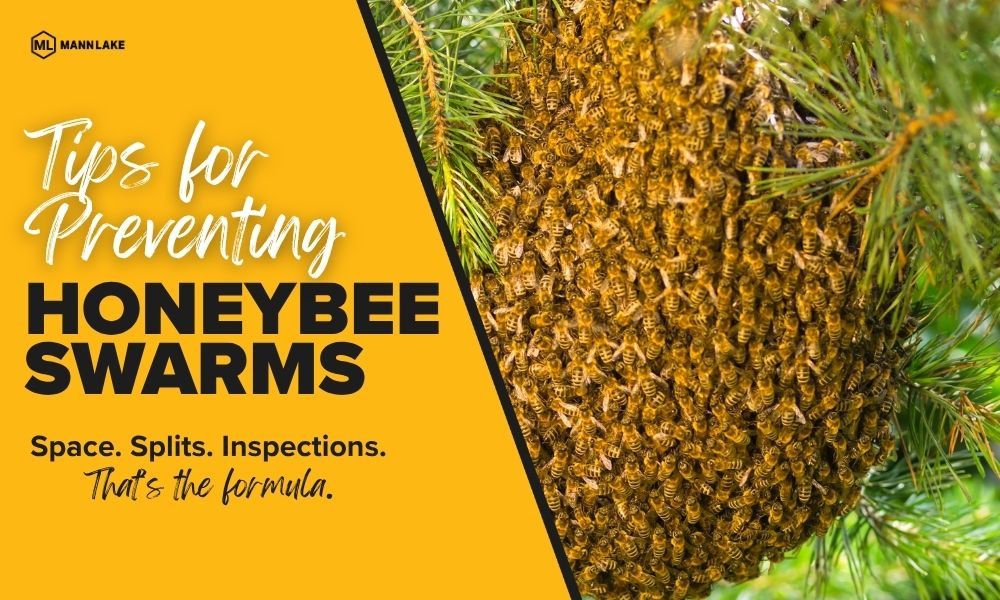
Tips for Preventing Honey Bee Swarms This Season
Stay Ahead of Swarm Season and Keep Your Colonies Working for You
Swarm season is just around the corner—and while swarming is a natural part of a colony’s lifecycle, it can mean lost bees, reduced honey production, and extra stress for beekeepers.
The good news? With a few proactive steps, you can significantly reduce the chances of your colony swarming—and stay in control during the busiest time of year.
Why Do Bees Swarm?
Swarming is natural behavior by bees and is the colony’s way of reproduction. Swarming typically happens when a colony becomes overcrowded. The colony essentially splits to find more room. Strong nectar flows accelerate population growth, and if space or conditions aren’t right, your bees will naturally split.

Give Your Bees More Space
One of the biggest triggers for swarming is congestion—and the easiest way to prevent it is by adding space early.
Instead of waiting until your hive is packed, stay ahead with additional hive bodies so your colony can expand naturally; keeping the queen laying and the worker bees storing honey.
Add space and improve apiary performance with the Color Collection 10 Frame Deep Hive Body Kit
- Pre-painted, ready-to-use hive bodies
- Bright colors help bees identify their hive
- Reduces drifting between colonies
- Saves time—no painting required
Pro Tip: If your bees are filling frames fast, it’s already time to add another box.
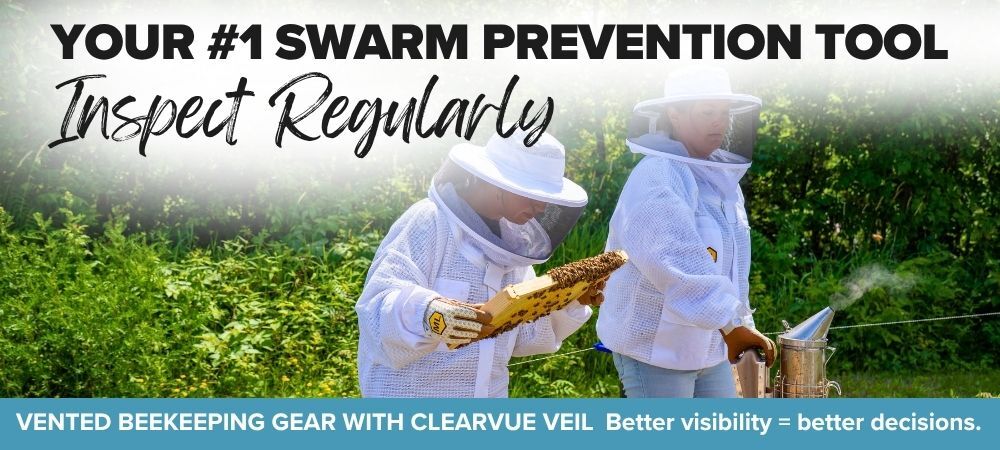
Inspect Regularly (Your #1 Swarm Prevention Tool)
Consistent inspections are the most powerful tool you have to prevent swarming.
Check your hives every 7–10 days during peak season and watch for:
- Queen cells
- Crowded brood nests
- Reduced laying space
-
The earlier you catch these signs, the easier it is to take action.
Inspect with confidence using the Vented Beekeeping Suit with ClearVue Veil
- Crystal-clear veil for better visibility
- Lightweight, breathable design for warm weather
- Stay comfortable during longer inspections
- Spot swarm signs faster and more accurately
-
Better visibility = Better decisions.
Manage Queen Health
A strong queen helps hold your colony together.
Young queens produce stronger pheromones, reducing the urge to swarm. If your queen is slowing down, requeening can stabilize the hive and improve productivity.
Improve Ventilation
Hot, poorly ventilated hives can increase stress and encourage swarming.
Improve airflow by:
- Using screened bottom boards
- Adjusting entrances
- Providing shade during extreme heat
-
Split Strong Colonies
If your hive is booming, splitting it is one of the most effective ways to prevent swarming.
Splits reduce congestion, mimic natural behavior, and help you grow your apiary—all at the same time.

Turn Swarms Into Opportunities
Even with the best prevention, swarms can still happen. The difference? Being ready for them.
Be prepared with:
- Bee Swarm Trap – Give swarms a place to land
- Swarm Commander Spray Lure – Attract and guide bees into your trap
- Extra Hive – Keep extra equipment on hand if you catch a swarm and need to hive them.
-
Place traps near your apiary to turn potential losses into new colonies.

Want to Take It One Step Further?
Color plays a bigger role in hive health than you might think.
Distinct hive colors help bees navigate more efficiently, reducing drift, strengthening colonies, and supporting overall apiary balance.
Read more:
How Colorful Bee Hives Help Prevent Drift and Why Your Bees Will Thank You
Stay One Step Ahead of Your Bees
If you’re wondering whether it’s time to add space, inspect, or split… it probably already is.
Swarm prevention is all about timing—and preparation is what keeps your bees productive and right where they belong.
Get Ready for Swarm Season
From adding space to catching swarms before they leave, having the right equipment makes all the difference.
Shop swarm prevention essentials and be ready for whatever spring brings.